

Tag: golf
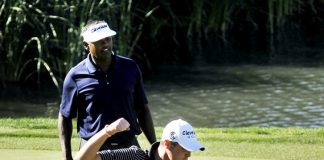
Golf: Peter Jacobsen named 2013 Frys.com Open Honoree
Pro golfer and commentator Peter Jacobsen was named the Honoree of the 2013 Frys.com Open Tuesday.
Lewis: Be prepared for rain on the golf course
It’s that time of the year, when the rain comes and affects the playing conditions on the golf course. The three keys to playing golf in wet conditions are simply to stay dry, use more club and knowing the rules of golf for casual water.
Lewis: Saying goodbye to a mentor
I lost a great friend and mentor this past month in Hall of Fame golf instructor Jim Flick. He taught golf for more than 50 years and he died of cancer at the age of 82. He was considered as one of the top three best golf instructors of the 20th century.
Lewis: Create your putting signature
Your putting stroke should be like your signature. When signing your name, you write with a flow and confident stroke. You do not worry if you are spelling your name wrong. Each signature takes the same amount of time and usually without much thought to it.
Bruce Lewis: Dial in your sandwedge
Most golfers know to open up their clubhead on bunker shots. This is because the sandwedge is designed to create enough bounce to allow the club to pass underneath the ball without getting stuck in the sand.
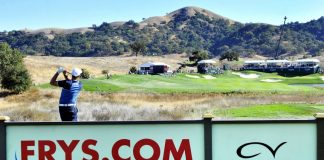
GOLF: Blixt outlasts field to claim Frys.com Open championship
As an aspiring hockey player growing up, Jonas Blixt said he didn't have a professional golf role model. Golf was a just a summer activity in his hometown of Nassjo, Smaland, Sweden.
Lewis: Watch your pace on the course
We all have our own timing and tempo. Every time we play, we work on the tempo and pace of our play. But everyone doesn’t always keep the same tempo. Sometimes on the putting green, people change how they play. They shouldn’t. The one area I recommend you keep a regular tempo is on the putting green.
Lewis: Taking a off a little pressure
A very common problem with beginning golfers is that they have too much pressure on their grip. There are two very good drills that help develop good grip pressure.
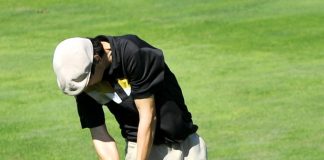
Golf: Locals take a swing at the PGA
More than 80 local golfers took to the links Wednesday, in the first step to earning a spot in the 2012 Frys.com Open, which kicks off next week.
Lewis: Driving ranges are a building block
“Everything on the golf range is set up for success. On the golf course, everything is set up to test you,” pro golfer Jim Flick once said.