

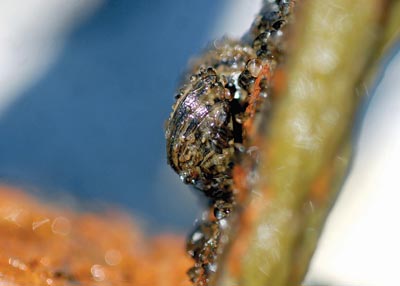
Doubts about the effectiveness of measures designed to kill
invasive zebra mussels in the closed-to-the-public San Justo
Reservoir will force a repeat of an eradication study this
summer.
Doubts about the effectiveness of measures designed to kill invasive zebra mussels in the closed-to-the-public San Justo Reservoir will force a repeat of an eradication study this summer.
The popular fishing and boating spot off Union Road has been off limits to recreational users since the fingernail-sized mussels were discovered there in January 2008. The San Benito County Water District continues to use San Justo to store and distribute water for agricultural use, but the gates have been closed and locked for more than two years.
The United States Bureau of Reclamation this week met with Jeff Cattaneo, the water district’s executive director, to discuss the status of a pilot study that evaluated how effective exposing the mussels to the elements would be in their eradication.
“The study had some questions that remained,” Cattaneo said. “It appears it is very effective but we are looking for whether it’s going to be 100 percent effective or not. In order for us to use it as part of the eradication effort, we need to be relatively assured of its effectiveness.”
First conducted during the cooler and more humid winter months, the study revealed that the lives of many mussels were extended by the more temperate weather, with some living up to 40 days out of water.
“There was some uncertainty at the end of that time whether those mussels were still alive or dead,” Cattaneo said. “We’ll repeat the full study in the summer when the ambient conditions will be significantly different,” with warmer temperatures and lower humidity. “If it appears that it cuts down on the time the mussels need to be exposed to air, and it looks to be near 100 percent effective, we’ll incorporate that into the eradication plan.”
Zebra mussels originated in Europe and were found in the eastern United States in the 1980s. The freshwater creatures are harmful to water systems because they produce toxins that kill native organisms and also reproduce so quickly and in such great numbers that they can clog drinking water or agricultural irrigation delivery systems.
Look for the full story in the Pinnacle on Friday.