
Voters get picky with tax vote
It was the alarm bell heard ’round the county, and other public
agencies should take serious notice.
Voters on June 7 denied the Hollister School District’s proposal
for a $96 annual parcel tax to sustain programs that are on the
chopping block or beyond, such as those in music, sports and
libraries. The district needed two-thirds support, and it didn’t
even come close to obtaining that supermajority.
Voters get picky with tax vote
It was the alarm bell heard ’round the county, and other public agencies should take serious notice.
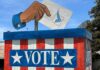
Voters on June 7 denied the Hollister School District’s proposal for a $96 annual parcel tax to sustain programs that are on the chopping block or beyond, such as those in music, sports and libraries. The district needed two-thirds support, and it didn’t even come close to obtaining that supermajority.
Voters cast a mere 51 percent approval despite supporters having a slew of advantages – some self-devised through crafty surveying – on their side.
Namely, the district is the county’s biggest employer, which lends itself to the likelihood of a lot more “yes” than “no” votes among those workers because they stood to directly gain from its approval. There was strong union support for the parcel tax – again, in a county where public employment and organized labor remain a political force. It was the only item on the ballot, which would tend to spur low turnout among the general population. And the district exempted seniors, who vote more than other age groups and also lean more conservative than others do, from having to pay the tax.
In the end, $96 is $96 whether you slice it into fourths or thousandths – which, by the way, is about a dime per payment that would be due at the start of every breakfast, lunch and dinner for the next four years.
The failure of the parcel tax, though, reflects a lot more than sentiments about the Hollister School District, which has struggled in the public relations department as of late, partly due to its lopsided changeup on the interdistrict transfer policy.
Beyond the Hollister district, it signals that the voters in this county – ravaged enough by the Great Recession to garner a feature story in the Wall Street Journal about our slow recovery – have become increasingly picky about where and how they want to spend their limited tax dollars.
For the Hollister district, other school entities and municipalities alike, there were lessons to learn from the June 7 special election.
Voters want transparency and were turned off by the private consultant’s survey that led to the special election. Governments that represent the people should be honest with the people.
For instance, the reality is that school-sponsored music and sports programs are destined to kick the bucket at the middle school level, whether it’s next year or five years from now. The money isn’t there, and core academic subjects are falling by the wayside as a result. Outside organizations will have to pick up the slack when it comes to extracurricular programs for youths, used by parcel tax supporters from the school election playbook to drum up a more emotional, heartstring-laden message.
Let’s be realistic. Let’s be honest next time around and share ideas that stand to benefit educators, students and the entire electorate for the long term – such as working with other districts and the County Office of Education, such as marking a clear path toward improving local students’ performances in math, science and English – when proposing to ask for more hard-earned money from taxpayers.
How about instead of promising you won’t use that pot of money on administrators’ salaries – why not also commit to cutting administration costs altogether as well?
For public agencies as a whole, the parcel tax defeat also goes to show that a positive, broad campaign is necessary to win public favor here, especially during these difficult times.
Hollister district officials did almost nothing beyond promoting the parcel tax among inner circles that already tend to support such measures.
In the end, they were caught in a Catch-22 of their own making. They committed themselves to a strategy of limiting turnout as much as possible. They had no choice but to neglect the notion of campaigning aggressively to the general public, of being wholly genuine.