

Tomorrow will be Veterans Day, November 11, 2009, and I was
wondering, but not for the first time
– what would Seymour think?
Tomorrow will be Veterans Day, November 11, 2009, and I was wondering, but not for the first time – what would Seymour think?
More than a decade after I retired from the Army and a few years before he died in November of 2000, my Dad mentioned that the Navy had named a ship after his distant cousin, Seymour Ruchamkin, who served during WWII. I was stunned, after all, I had been in the service for more than 22 years and he had never said a thing about it before; I had never heard the name Seymour Ruchamkin – I did not even know how to spell it.
I did know that the Navy did not name ships after just anybody, so I decided to do some detective work. It didn’t take long to run down facts; Seymour D. Ruchamkin, Lieutenant, junior grade, United States Navy, had a Wikipedia entry all his own and here is the meat of it:
He was born 8 March 1912 in New York City. He graduated from the University of California in 1940 and enlisted in the United States Naval Reserve. He attended Midshipman School at Northwestern University, and reported to the destroyer USS Cushing (DD-376) on 24 January 1941.
On 13 November 1942, Lieutenant, junior grade, Ruchamkin was killed in action against Japanese forces in Ironbottom Sound off Savo Island in the Solomon Islands during the Naval Battle of Guadalcanal.
He was awarded the Navy Cross posthumously for “… extraordinary heroism as first lieutenant aboard the USS Cushing … While under vigorous bombardment by hostile naval units … Ruchamkin …efficiently directed the fighting of fires and the efforts to control damage. Leading his party to an area below decks to extinguish flames which were raging there, he never returned.” He was among the 6 officers and 53 men lost from the Cushing’s crew.
The U.S. Navy destroyer escort USS Ruchamkin (DE-228), was named for Ruchamkin. She was converted during construction into the high-speed transport (APD-89, later LPR-89), and was in commission as such from 1945 to 1946, from 1951 to 1957, and from 1961 to 1969.
End of story – but not for the not for those who loved Seymour. When Veterans Day rolls around I often wonder what they thought and what would Seymour think of the country he died to protect.
What would Seymour think of the fact that I own a two Toyotas? What would he think of twitter and people who walk around all day with phones stuck in their ears because they have to be connected everywhere all the time? I believe I know what he would think of the economic hiccup we are going though; he’d think we were crybabies. It isn’t even a crack in the cement compared to chasm of the Great Depression that he saw in his shortened youth.
Almost 40 years ago, my number came up and I was assigned special duty as Survival Assistance Officer, aiding a family who lost their son, we’ll call him John, while on service to his nation, as others will be lost and not just in combat. All aspects of soldiering, even training, even loneliness, are risky business.
Thankfully, it was the only time I had this dreaded duty and I believe I did about as good a job as I could, except for one thing – I never asked John’s family what they thought about it all and to this day I wonder what Seymour and John would think of that?
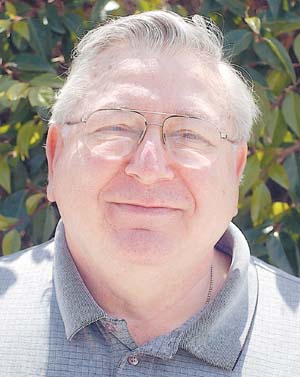
Martin G. Richman, Chief Warrant Officer 4, United States Army (Retired)