
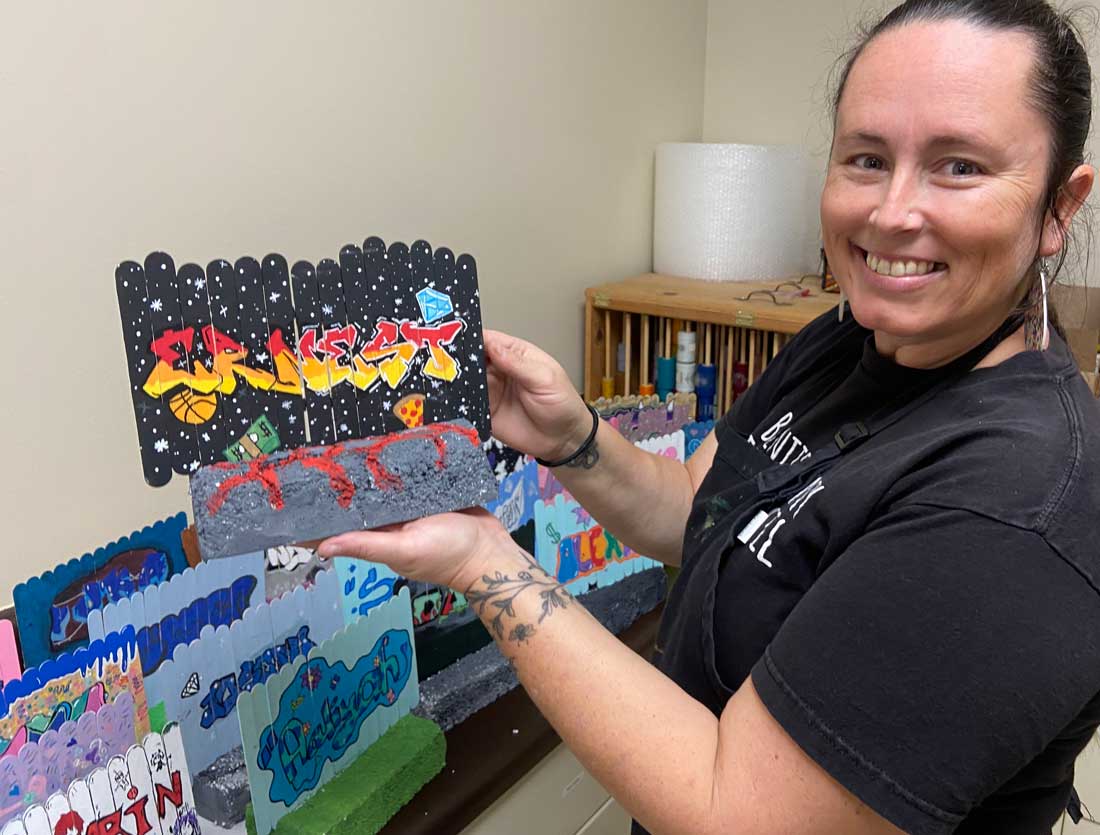
On a recent morning, Rancho Santana School art teacher Stephanie Skow marveled at the work of her students in advance of the San Benito County Arts Showcase coming April 9 at the Veterans Memorial Building in downtown Hollister.
Skow showed artwork from all of the classes—TK through eighth—which she teaches as part of a longstanding partnership with the San Benito Arts Council. While she is employed by the local nonprofit organization, Skow has become a fixture of the Rancho Santana community.
“The talent in the kids across the grade levels—literally from my TK kids through eighth grade—they just are so creative at every level,” Skow said. “I’ve had my eighth-graders since they were in fourth grade now. It’s watching them grow up and then turn into these incredible artists that I hope stays with them.”
As she proudly explained themes assigned to each of the grade levels for the upcoming art showcase, Skow came to the eighth-grade project—miniature versions of graffiti art with students’ names etched across the fence-like backdrops made from popsicle sticks. Skow borrowed the idea from another art teacher and thought her students would love it.
“These are incredible. These guys blew my mind,” Skow said, noting how the eighth-graders spent six to seven weeks on the project. “They had to fully design it. They had to design their fence. They had to think of their color choices.”
Through the Arts Council partnership, Skow has taught at Rancho Santana since the school’s inception almost five years ago. She started with third through seventh grade. When the school district had the ability to expand the program to TK through eighth grade, Skow jumped at the chance to take on all grade levels.
“Then I can grow with them. I know what they’re capable of, what their challenges are, and help them overcome those challenges,” she said. “We’re a full-inclusion school so we have a lot of Learning Center kids in with us. I mean, those guys are some of the most creative kids we have. They’re just incredible. They’re so talented. I love them all.”
With Skow engrained, Rancho Santana School has established a firm commitment to the arts as part of its offerings. The passage of Prop. 28 at the state level adds funding stability for all districts to provide arts education, with the Hollister School District employing a combination of staffed and contracted teachers.
For Rancho Santana Principal Anissa Dizon, arts education is a crucial component of the whole-child approach to education at the site.
“Some kids struggle in academics, so we always want to offer them a different area or subject,” Dizon said. “There’s no wrong or right in art. You’re not graded on art. It’s just more of a creative process.”
She noted how she is protective of the program as an outlet to keep all students’ engaged, while showing appreciation for the site’s dedicated artroom and Skow’s constant presence. Dizon said other teachers have been extremely supportive of Skow as well.
“We have an art teacher who’s become part of our culture, part of our family, and also is willing to accept and be committed to what Rancho Santana School is all about—social-emotional wellbeing,” Dizon said. “She has a calming corner. Whatever we have, what other teachers are expected to have in their classroom, she has. She’s open to all of that.”
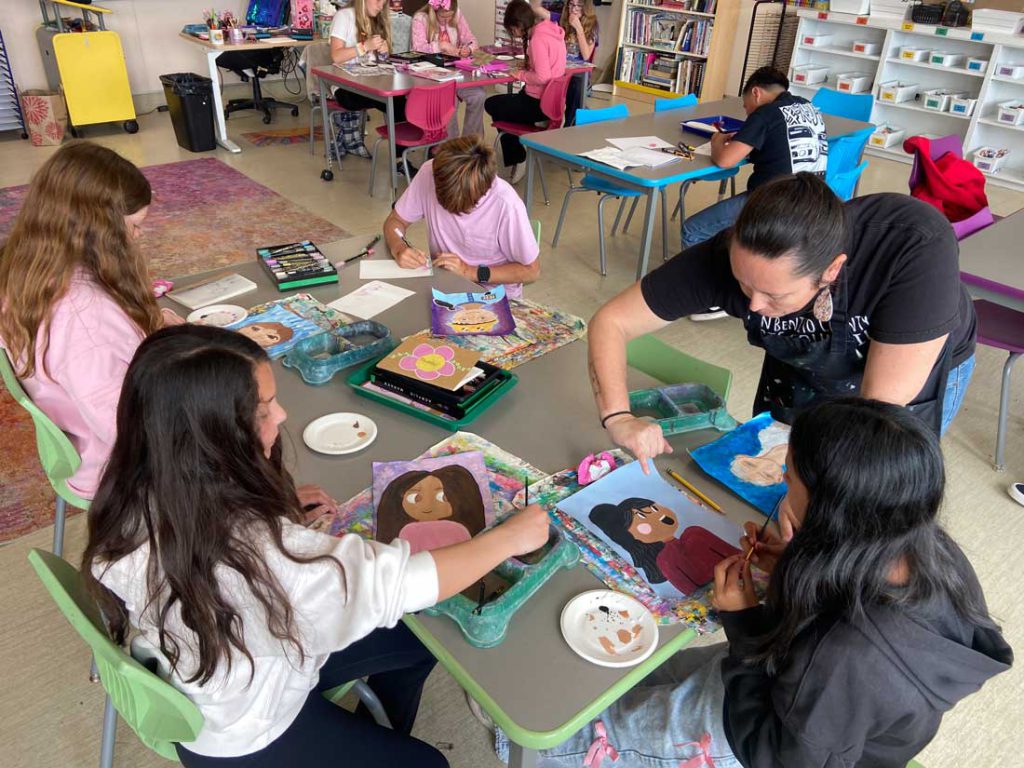
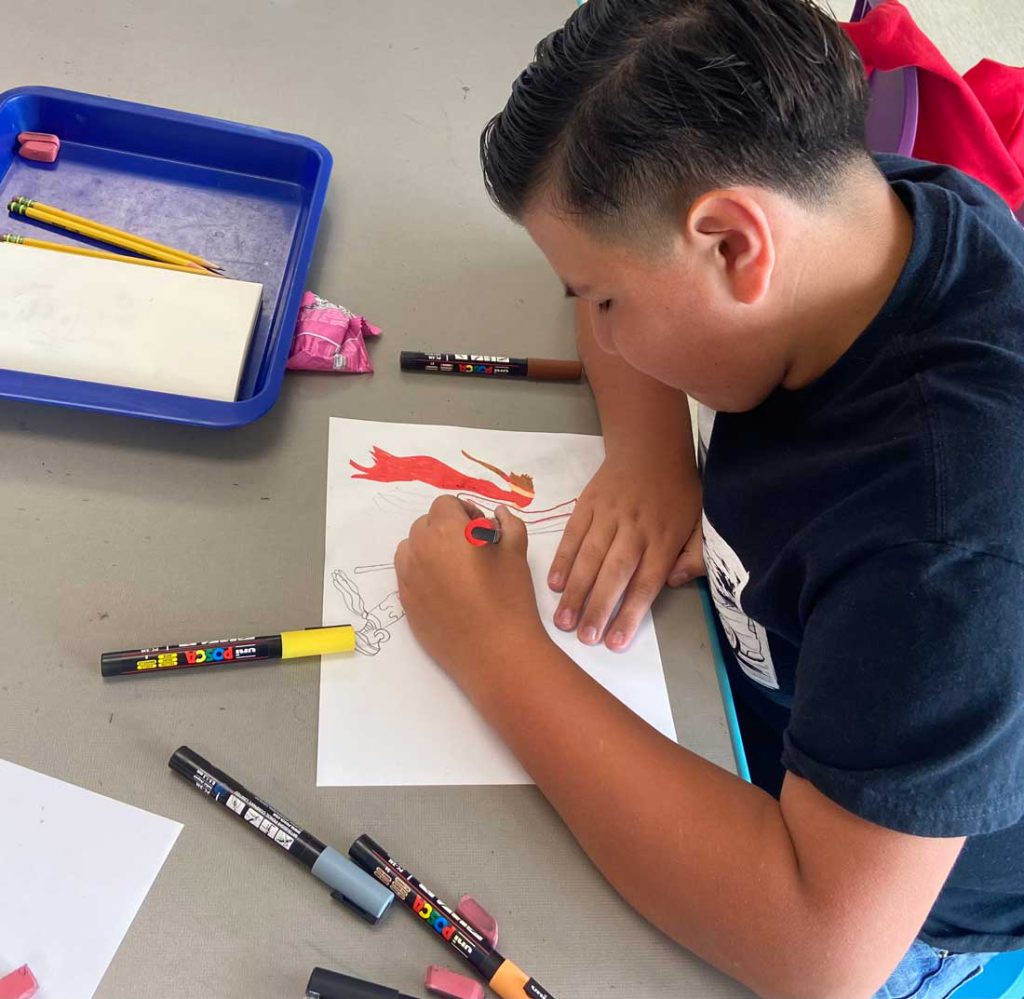
Dizon has seen an undeniable benefit from art to students at all grade levels and, while walking through the artroom during a sixth-grade class, reemphasized her constant awe at their work.
“I shouldn’t be so surprised at their final products, but I’m always surprised,” Dizon said.
That excitement is palpable from the students, too, whose positive energy was evident during that recent sixth-grade session.
“I love art here because it’s really fun,” said student Keira Ownbey. “It’s an extra class you can take. You get to express yourself—what you’re thinking.”
Student Rose Cabrera called the class fun and said she enjoys spending time with friends.
“I really like Ms. S because she’s really nice and helps us,” Cabrera said. “She gives us tips, and shows us new ways to paint and new techniques.”