
Former SJSU coach Ivan Guevara talks about what it will take for
San Jose to run with the big boys
When Ivan Guevara first took over the San Jose State men’s
basketball program in 1971, the school was considered by many
pundits to have the worst NCAA program of any Division I school in
the nation.
The Spartans were coming off a 29-game losing streak, recruiting
was next to impossible and the team didn’t even have its own
gymnasium to play in on campus. Most home games, which took place
at the city’s Civic Auditorium back then, would draw no more than
50 people, most of them being parents and friends of the
players.
Former SJSU coach Ivan Guevara talks about what it will take for San Jose to run with the big boys
When Ivan Guevara first took over the San Jose State men’s basketball program in 1971, the school was considered by many pundits to have the worst NCAA program of any Division I school in the nation.
The Spartans were coming off a 29-game losing streak, recruiting was next to impossible and the team didn’t even have its own gymnasium to play in on campus. Most home games, which took place at the city’s Civic Auditorium back then, would draw no more than 50 people, most of them being parents and friends of the players.
But Guevara, who had had a great deal of success coaching at Southern California’s Whittier College, wanted to have an opportunity to build a struggling Division I program from the ground up and he liked the area.
During his stint at San Jose State, he would win a number of coaching awards and accolades and watched with enthusiasm as his makeshift Spartans upset a number of nationally ranked teams.
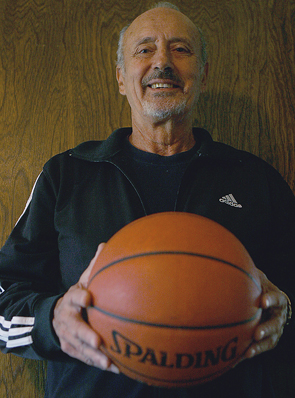
Recently we had a chance to talk with the retired coach, who is now 69 and living in Morgan Hill, about his days at San Jose State.
Q: What is your greatest memory from your coaching days at San Jose State?
A: My first year I took over a team that lost 29 games in a row to become the most improved team in the country. We broke the losing steak with a win over the Air Force Academy. That first year we defeated every team in the conference, except Long Beach, and even with them we lost to them by just a point.
Q: What was your biggest upset victory?
A: That first year we beat Cal and USF. My second year there we did beat Long Beach and they were the No. 3 ranked team in the nation. It was funny, Sports Illustrated had come out to cover the game because they were doing a story on Ed Ratliff, an All-American from Long Beach and we wound up upsetting them and it was all over the news. We became part of the story then.
Q: Did you win any awards those first few years?
A: In my best year we went 18-9. In the PCAA tournament that year we ended up losing to Long Beach in the finals. If we had won, we would have gone to the NCAA’s. During my time at Whittier College I was named Conference Coach of the Year three times. I won the same award once in the PCAA. I was also named the District Coach of the Year for the Southern California Region, the Santa Clara Valley Coach of the Year and the Northern California Coach of the Year.
Q: What was the hardest part about coaching at San Jose State?
A: Recruiting. It was tough to have a kid come out here and show him a 3,000-seat auditorium when the other schools had 10,000-15,000 seat arenas and a winning tradition as well. We never had a winning tradition at San Jose State. The school still doesn’t have one.
Trying to run a D-I program every year without much money was difficult. The school’s philosophy then was to sink all of the money into football and if football makes it, it pays all of the bills for the whole department. I like football – don’t get me wrong – but even with football we were talking about increasing our stadium capacity to 35,000 seats. And when we did, we still weren’t filling them. A school like Michigan is averaging 65,000 a game. How do you compete with that?
Q: Since you didn’t have the kind of budget to go up against the UCLAs, Stanfords and Indiana Universities of the world, would you recruit mostly from the surrounding junior colleges?
A: A lot of times we would but it is not very common for a junior college player to make the jump to Division I. The reason is that since you only have them two years [eligibility] they need to go in and immediately be able to start. With a freshman you can invest some time and develop them; with a junior college player you don’t have that luxury.
Q: Speaking of junior colleges, what do you think of Gavilan College and the basketball program up there?
A: Since we live in Morgan Hill, three of my sons played at Gavilan under Jack Richards. He had them playing above-average ball without too many above-average players. He was a good teacher and an outstanding technician of the game.
Gavilan is a good school and I feel it’s on the right track. The new basketball coach there is young, energetic and he played at San Jose State. He’s doing a lot of positive things and doing an outstanding job at developing the infrastructure there. He also seems hungry to get kids to come there and stay there.
Q: Did you ever experience any questionable recruiting tactics that were done at other schools?
A: I don’t really want to comment on it but I will say this. One year we were looking at a junior college kid who was All-American. It turned out he had a 1.9 GPA and only three transferable units. I couldn’t get him because he didn’t meet the school’s admissions standards. I couldn’t even start a folder on him because he didn’t have the grades. He wound up playing against me at another state school for the next two years.
Q: So what is it that has to happen for San Jose State to be considered a major Division I player and a perennial contestant in the March Madness tournament?
A: The problem is that San Jose State has always been considered a commuter school. The people that go there are, for the most part, all from the Santa Clara Valley. The school needs to be able to bring more kids in from all over.