
Twice Tyger, a small regenerative-farming vineyard north of Gilroy, has opened a seasonal tasting room this summer while it works through county approval for a permanent tasting pavilion and production facility on its own estate five miles away.
The current “satellite” tasting room, at a nearby facility leased from the Dorcich family where Twice Tyger has produced its wine for the past three years, recently moved from limited weekday hours to a full weekly schedule, now open Thursday through Monday.
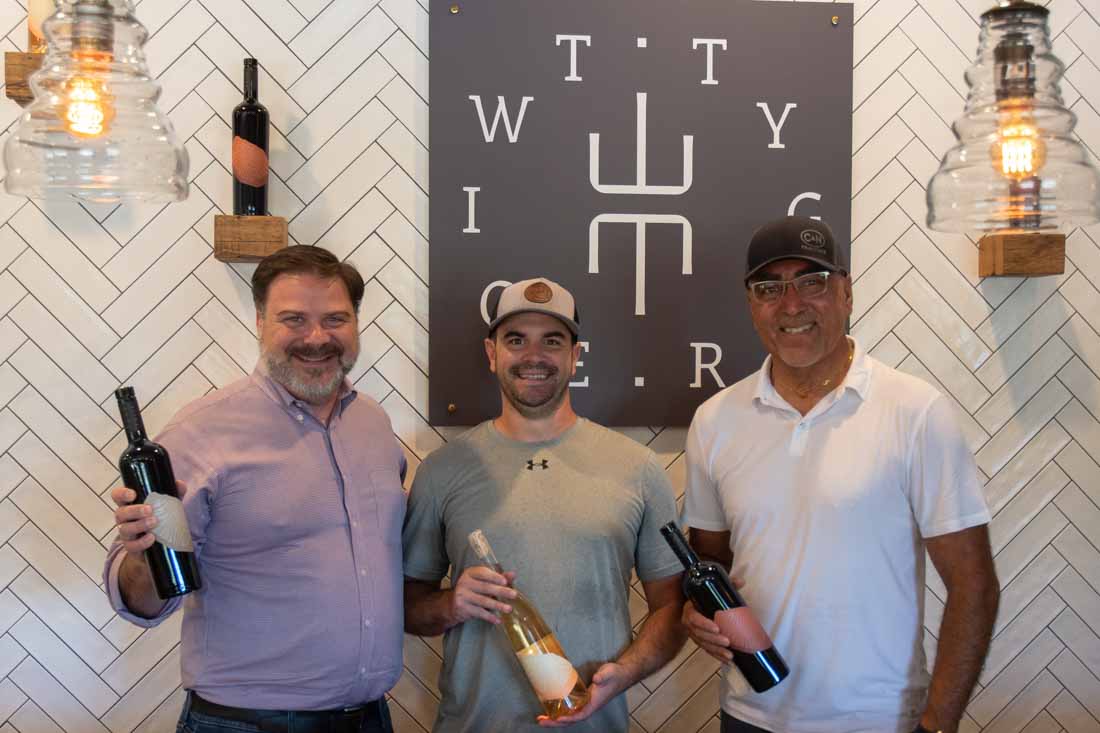
The tasting room, located at 11775 Watsonville Rd. in Gilroy, is open to walk-ins and designed to be casual and family-friendly, according to Mike Kohne, the winery’s director of sales and marketing.
“It’s a much more casual, relaxed environment,” Kohne said. “It is not by reservation. It’s just walk-in: we have set hours, and people can walk in and we’ll take care of them.”
Twice Tyger’s owner, Bill Rataul, bought the 30-acre property in 2019 and planted the vineyard the following year. The land, which had been in agricultural use since at least 1895, was most recently an alfalfa field before Rataul purchased it, and the soil was heavily depleted.
Before turning to full-time farming, Rataul spent more than three decades in the medical device and life sciences industry, founding the Morgan Hill-based medical technology company Paramit before selling it and turning to agriculture. He dabbled in agriculture on the side for years, including planting a small vineyard around his own house in 2006, before deciding to make the hobby into a second career.
The winery’s name is meant to reflect that shift, Kohne said. Rataul, who grew up in an agrarian family in northern India, chose the tiger as a symbol of a balanced ecosystem.
“In a natural ecosystem, you won’t find an apex predator unless it’s a complete, holistic environment,” Kohne said. “And everything we do is conceived with biodynamic principles. It’s all regenerative and organic.”
He said the “Twice” part of the title is a nod to it being Rataul’s second major undertaking, after his career in biotech.
Twice Tyger describes its farming as regenerative rather than simply organic, meaning it avoids all fertilizers, organic and synthetic alike, in favor of techniques that encourage natural soil regeneration including cover crops, grazing sheep and natural soil-building.
“You want to create the most biodiversity that you can on the property,” Kohne said, pointing to the winery’s olive trees, beehives, flowerbeds, native groundcover plants and other flora alongside its grapevines.
Rataul said the property’s soil organic content has roughly quadrupled since before the vineyard was planted, rising from about half a percent to more than 2% in their most recent soil analysis—a change he attributes to years of cover cropping and avoiding tilling and synthetic inputs.
“The whole idea of regenerative is that you’re not putting anything into the earth,” Rataul said. “The earth regenerates itself.”
Twice Tyger currently grows 11 grape varieties across its 15 planted acres, predominantly Bordeaux-style reds such as Cabernet Sauvignon, Cabernet Franc and Petite Sirah, along with newly planted Malbec and Zinfandel. The winery is also expanding into white wines, with a Pinot Gris and a Sauvignon Blanc planned for release for the first time next year.
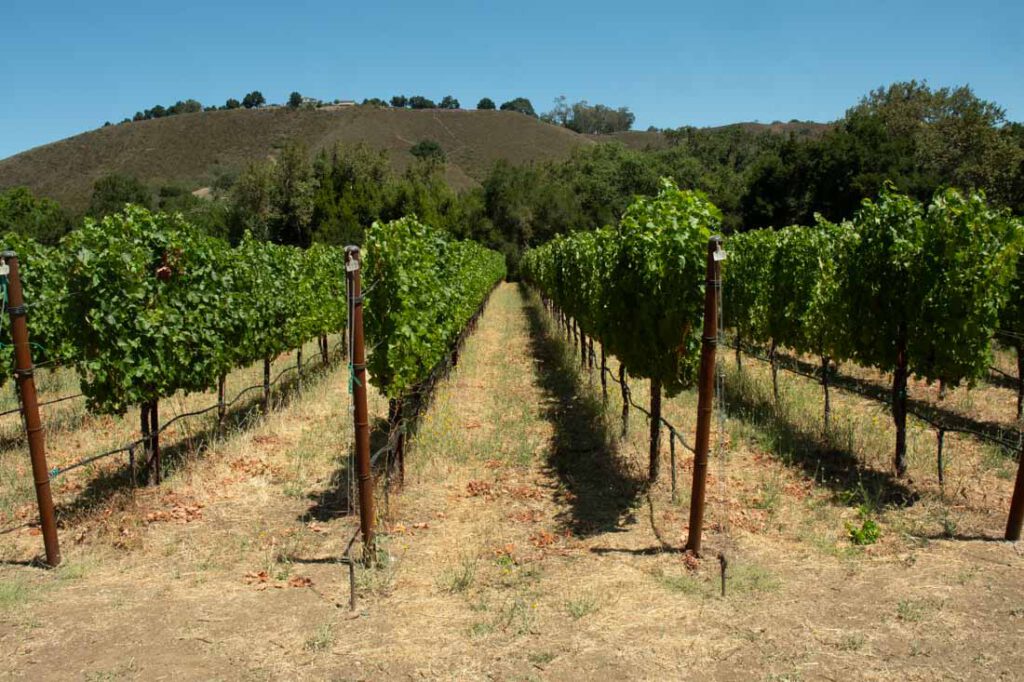
The winery produced about 2,200 cases this year and expects to reach roughly 3,000 cases as new varieties come online, Kohne said. Twice Tyger wines are also sold in several restaurants in the South Valley area.
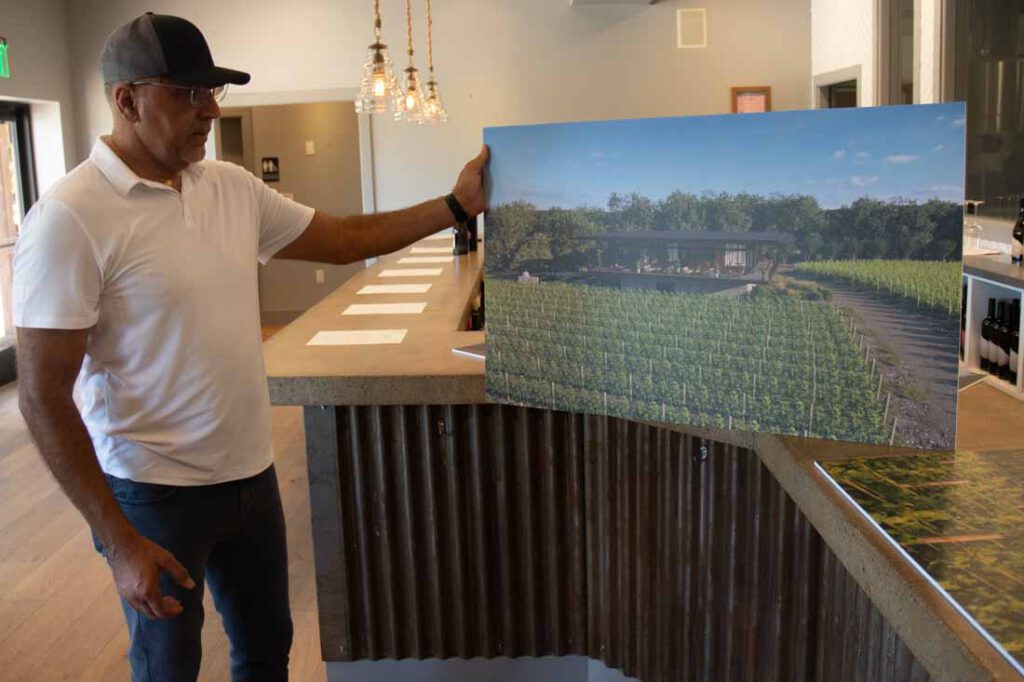
The current tasting room is a temporary stop as Twice Tyger works toward construction of a permanent facility on its own estate. The winery has spent more than two years working with Santa Clara County on plans for a production building and a tasting pavilion, and expects to break ground within the next several months.
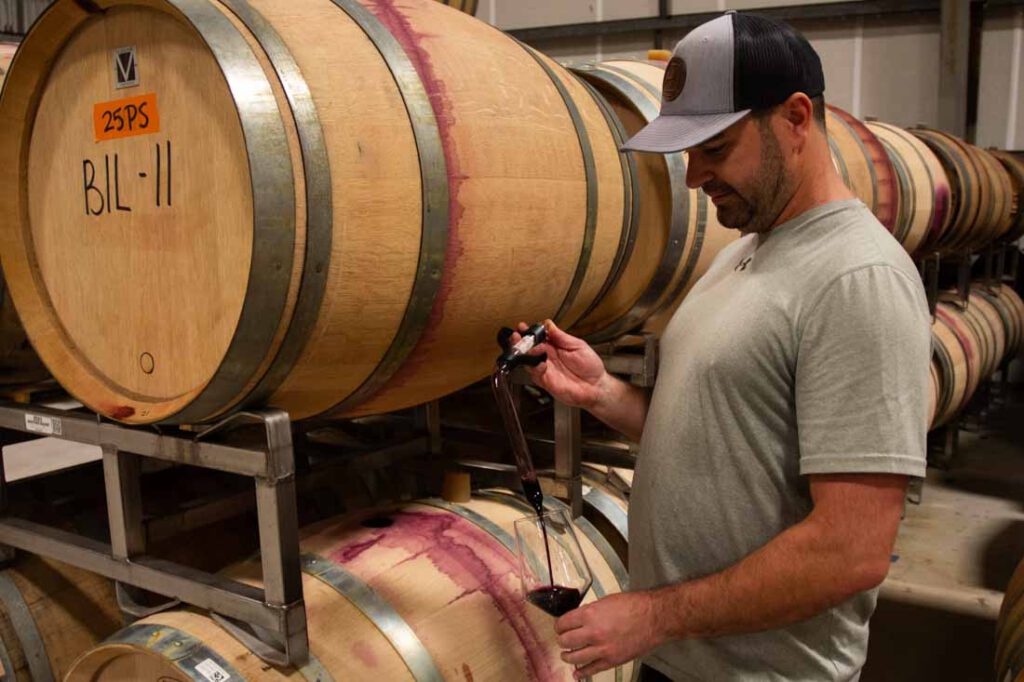
“Prior to opening the tasting room, we’ve been here for about three years,” Kohne said, explaining that Twice Tyger has borrowed Dorcich Family Vineyard’s production facilities while they develop their own. “As they got out of the production game, we took over the winery, got our own licensing, and we’ve been making wine here ourselves.”
Construction is expected to take about 18 months, with the winery aiming to bring the 2027 harvest into its own new production facility.
The planned tasting pavilion is designed with case and barrel storage set half a floor underground to keep it cool naturally, while the tasting room itself will sit elevated above the vineyard. Guests will look outside to see the tops of grape vines stretching out beneath them. The site will also include a kitchen intended to offer a small selection of food items to pair with the wine.
“We have a full vision of what we want to do and where,” Rataul said. “It’s a totally different experience to build something from the ground up the way you want it.”