
A group of Hollister voters is working to establish an Urban Growth Boundary around the city in order to limit future development and preserve agricultural and open space.
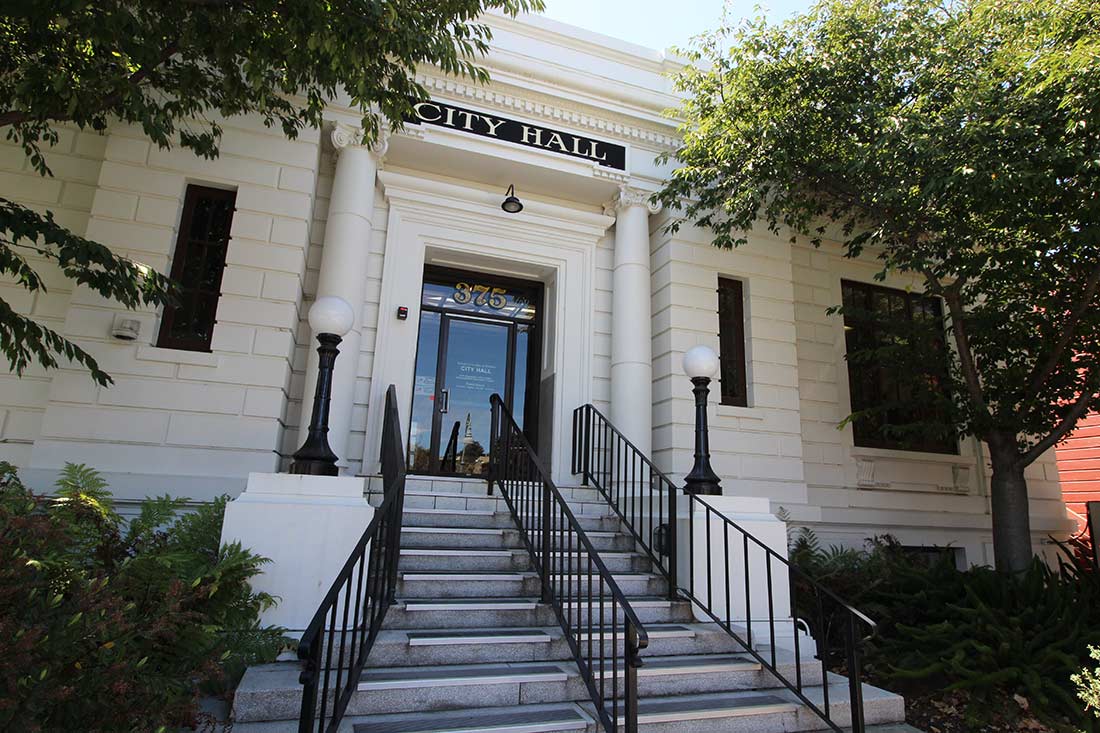
Proponents Larry Rebecchi, Craig Rutz and Belinda Garcia submitted a Notice of Intent to Circulate Petition for a citizens’ initiative to the city clerk’s office on Aug. 27. They also submitted a draft initiative text and ballot title and summary.
Under California election law, the city attorney’s office is tasked with preparing the final language of the initiative before the group can publish it in the newspaper and start collecting signatures.
The initiative would amend the city’s General Plan to surround Hollister with an Urban Growth Boundary (UGB), defined in the proponents’ draft as “a line beyond which urban development will not be allowed by the city, except for certain public facilities and in other limited circumstances.”
Rebecchi said a UGB is a way to control growth “in a logical manner” and prevent city officials in the future from extending services—such as sewer or water—outside the city limits without a plan to increase revenue.
“I’ve been in Hollister for over 50 years; people feel as if our roads are crowded, the schools are crowded and the sewer system is being tested,” Rebecchi said. “And we want to put some urban boundaries in. We can’t be extending our services at the expense of the residents of Hollister.”
If approved, the only development that would be allowed outside the UGB would be public parks; public educational facilities; agriculture and other open space uses; roadways; and certain other government facilities.
Other uses would be permitted only by a vote of the people, says the initiative draft.
Reasons for the initiative, according to the notice of intent, include preserving agricultural and open space lands surrounding Hollister; protecting residents from the cost of extending municipal services outside the UGB; promoting efficient growth; managing growth “to foster and protect Hollister’s rural and small-town character;” improving long-term development planning; and promoting “democracy in land use planning by giving city residents the power to determine how and when Hollister should grow” outside the UGB.
“Urban Development” is defined in the draft as “development that requires, utilizes or would result in the establishment of a new public or privately operated sewer, wastewater collection or treatment system or water service system, or the significant expansion or extension of any existing such system, or subdivision of land principally for residential purposes at a density or intensity inconsistent with the agricultural, open-space, natural-resource or other rural uses permitted outside the UGB.”
If the petition gains the required number of verified signatures and is certified by city officials, the city council will have the option of adopting the initiative as a local ordinance or putting it to the voters in an election. According to Ballotpedia.com, under California election law the proponents must gain signatures from a minimum of 10% of Hollister’s total registered voters before the city council can consider the initiative.
Urban growth boundaries are commonplace in larger and mid-size cities throughout California, and have often been established when communities have begun to experience the burdens associated with a spike in development. Nearby cities including Gilroy, Morgan Hill, San Jose and Watsonville all have UGBs or similar Urban Limit Lines.
In the November 2016 election, voters in Gilroy overwhelmingly passed a citizens’ initiative to establish a UGB around that city.