
As Valentine’s Day approaches, the scent of roses hangs thick in the air at a local flower shop, where the busiest season of the year is in full bloom.
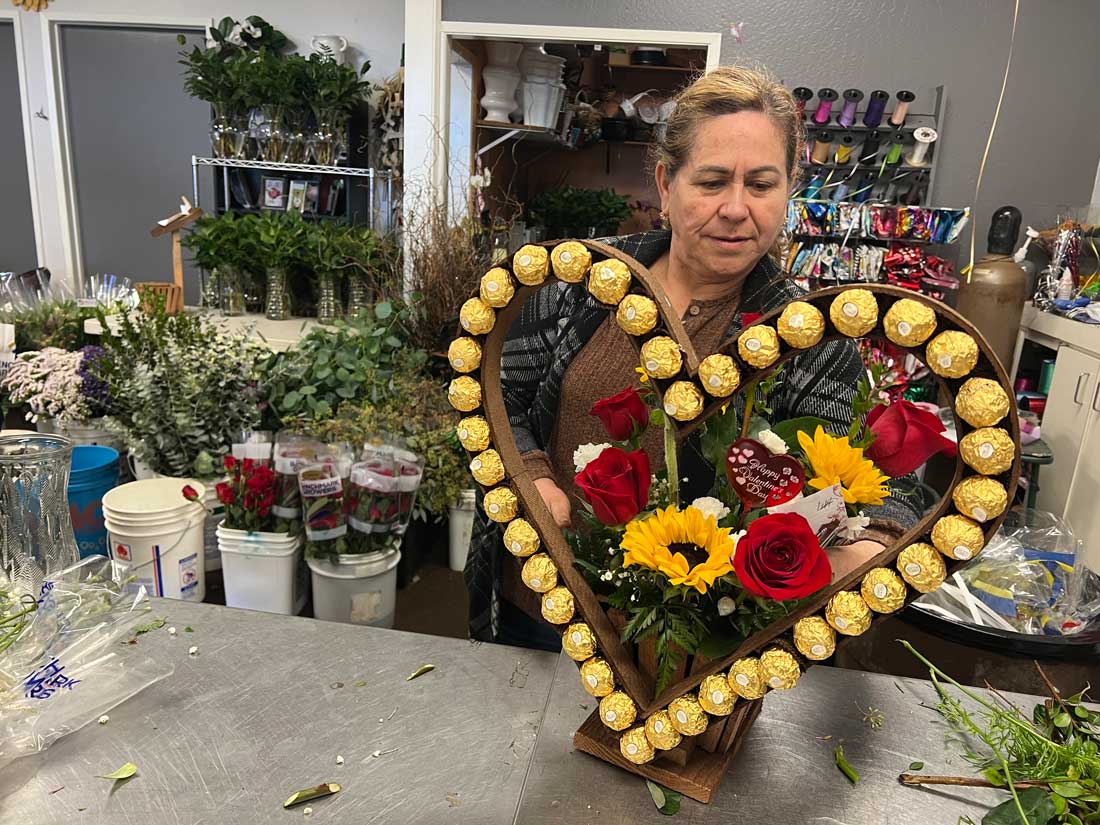
Inside Barone’s Westlakes Balloons and Gifts workspace, buckets of fresh-cut flowers line the walls—long-stemmed red roses, lilies and sprays of baby’s breath—while designers move quickly between worktables, trimming stems and assembling arrangements destined for kitchen tables and office desks across the community.
“The past few days have been very hectic,” Maria Gonzalez, the shop’s owner said, pausing briefly while assembling a bouquet. “It’s weeks of planning and long days and very stressful, but also a fun time of the year.”
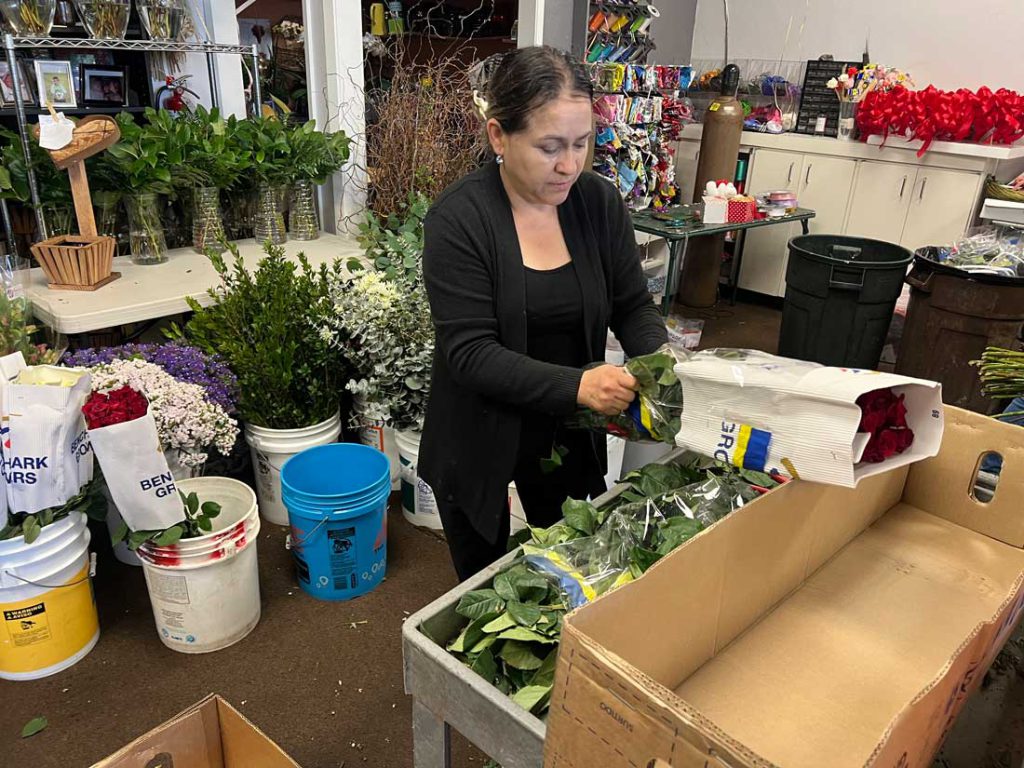
Gonzalez started out in the industry by working for another florist and selling flowers on street corners and outside grocery stores on weekends. She then worked for the owner of Barone’s before buying the business 14 years ago, raising her grandchildren in the store.
Preparation for Valentine’s Day begins well before February. Flower orders are placed months in advance, coolers are cleared to make room for extra inventory, and delivery routes are carefully mapped out to ensure dozens—sometimes hundreds—of arrangements arrive on time.
In the days leading up to Feb. 14, the pace intensifies as walk-in customers join those who ordered ahead.
While classic red roses remain the top seller, florists say tastes have evolved. Customers are increasingly asking for mixed bouquets that reflect a loved one’s personality—soft pastels, bold jewel tones or arrangements featuring seasonal greenery and unexpected textures.
“People want something meaningful,” said employee Adriana Navarro. “They’re asking for colors their partner loves, flowers that remind them of a first date, or arrangements that feel a little less traditional.”
Valentine’s Day also brings a steady stream of last-minute shoppers. Some sheepishly arrive on Feb. 14 hoping for a miracle. Some will even say, “what have you got left?” Navarro said with a laugh. Some make it a tradition to stop by on their lunch break. For the florist and staff, it’s all part of the charm.
“You see every kind of love,” Navarro said. “Romantic partners, parents buying flowers for their kids, friends surprising each other, even people treating themselves. It’s a reminder that Valentine’s Day isn’t just about romance—it’s about connection.”
Despite the long hours, the florist says the reward comes from being part of moments that matter. Each arrangement carries a message that can’t always be put into words.
As Valentine’s Day draws closer, the shop’s cooler doors swing open and closed, delivery vans come and go, and bouquets stack up, ready to be wrapped with ribbon and care. By the end of the day on Feb. 14, the shelves will be nearly empty—but the impact, the florist says, will linger.
This year, spending for Valentine’s Day in the U.S. is projected to reach a record of $29.1 billion, with 55% of consumers celebrating and spending an average of $199.78 per person.
Key spending areas include candy (56%), flowers (41%), and greeting cards (41%), while jewelry leads in total expenditure at $7 billion. More than half of consumers plan to celebrate, with significant others receiving the most gifts.