
The energy and enthusiasm were palpable at R.O. Hardin Elementary School for summer school on a recent morning.
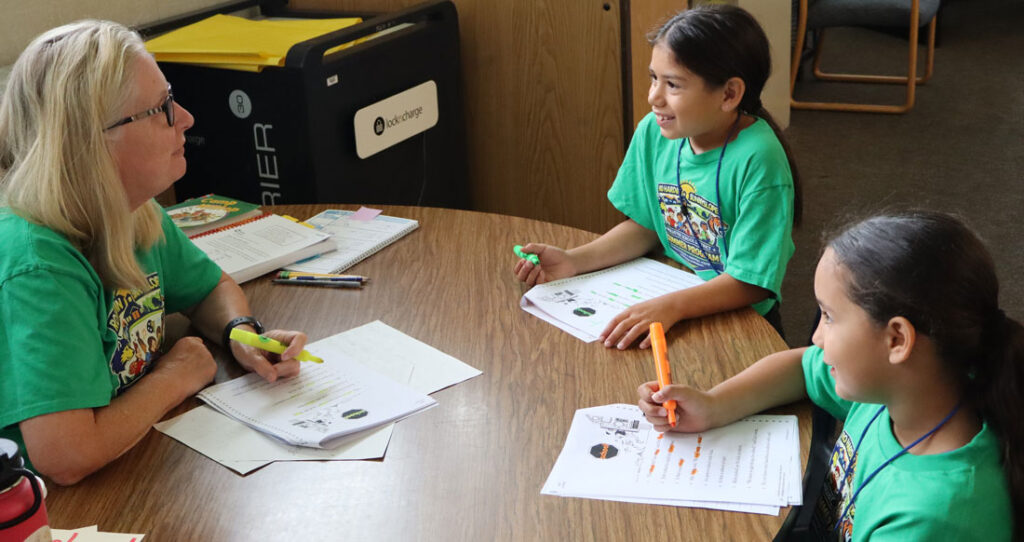
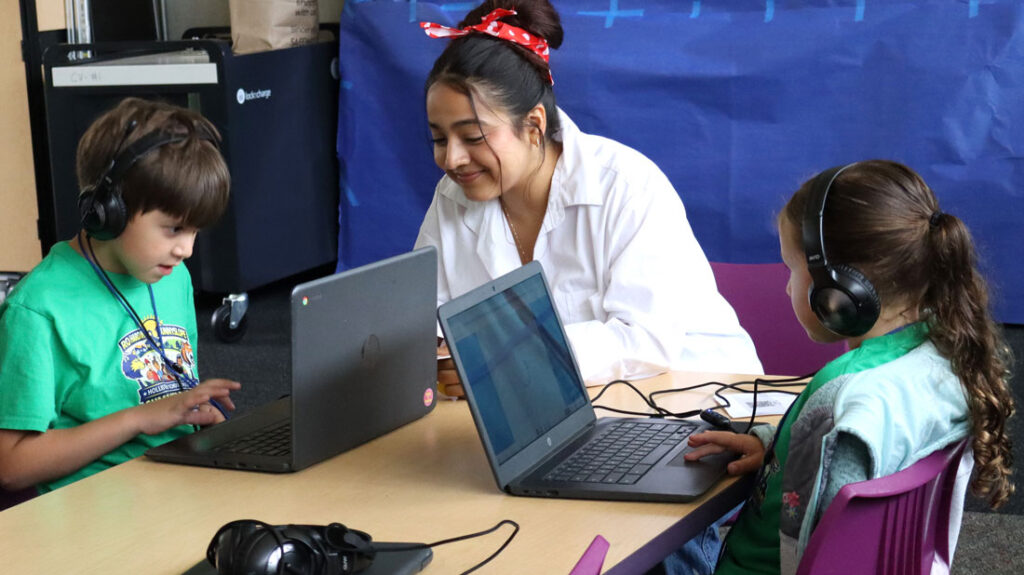
It was a typical day for the 85 students overseen by teachers, including classified staff members and partners with the San Benito Arts Council and Youth Alliance. Students are grouped for homeroom and then start their rotations for the day that include reading, writing, art and physical movement.
“The rest of the day after homeroom, they don’t see this group again,” R.O. Hardin Principal Lilia Espinoza said. “Then it’s almost like having an individualized plan because they are leveled in the area of reading and writing. They have their own schedules.”
R.O. Hardin is hosting kindergarten through 2nd grade students this summer, with Sunnyslope Elementary School hosting the remainder of general education and special education students. The Hollister School District rotates the summer programs among sites from year to year. The summer programs at R.O. Hardin and Sunnyslope started June 10 and operate through July 9.

At R.O. Hardin, Espinoza beamed at the variety of offerings for the students who attend from 8:30am-12:30pm for the four rotations before Youth Alliance takes over for the afternoon until 5:30pm with recreational activities like yoga or sports.
Each student moves through rotations with a lanyard attached to them so they can be redirected by staff if needed.
Espinoza, while walking the campus, continually lauded the work of school staff and partners who keep the students engaged throughout the day.
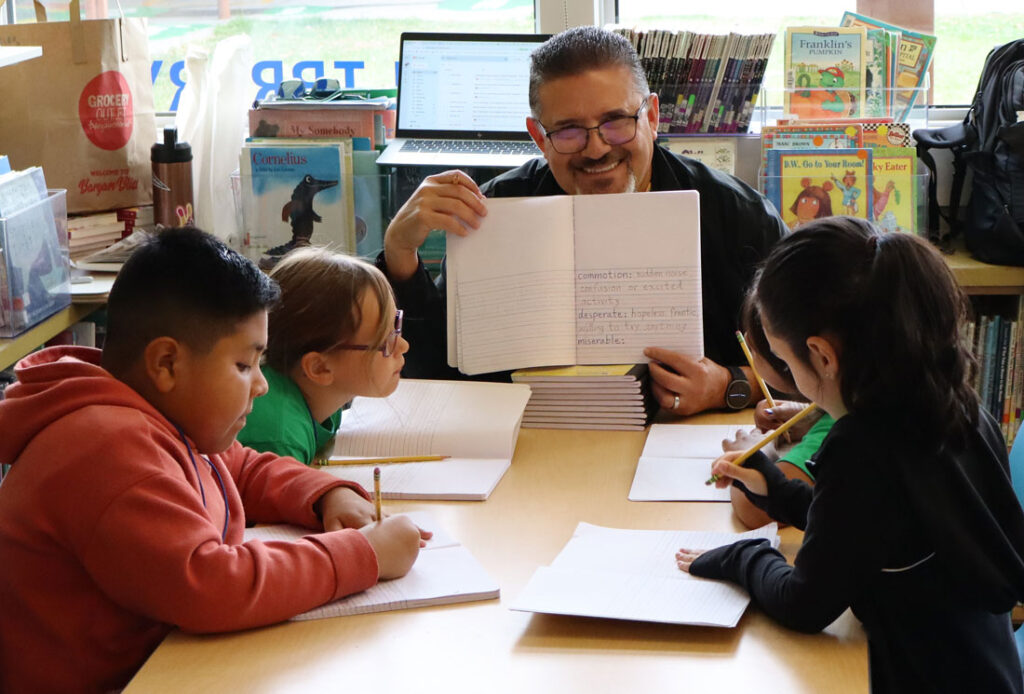
This summer’s academic programming at both sites includes reading instruction centered around “Charlie and the Chocolate Factory.” That part of the day is a key with R.O. Hardin, which has a science of reading focus. It goes hand in hand with the writing rotation where students follow up and write about what they read.
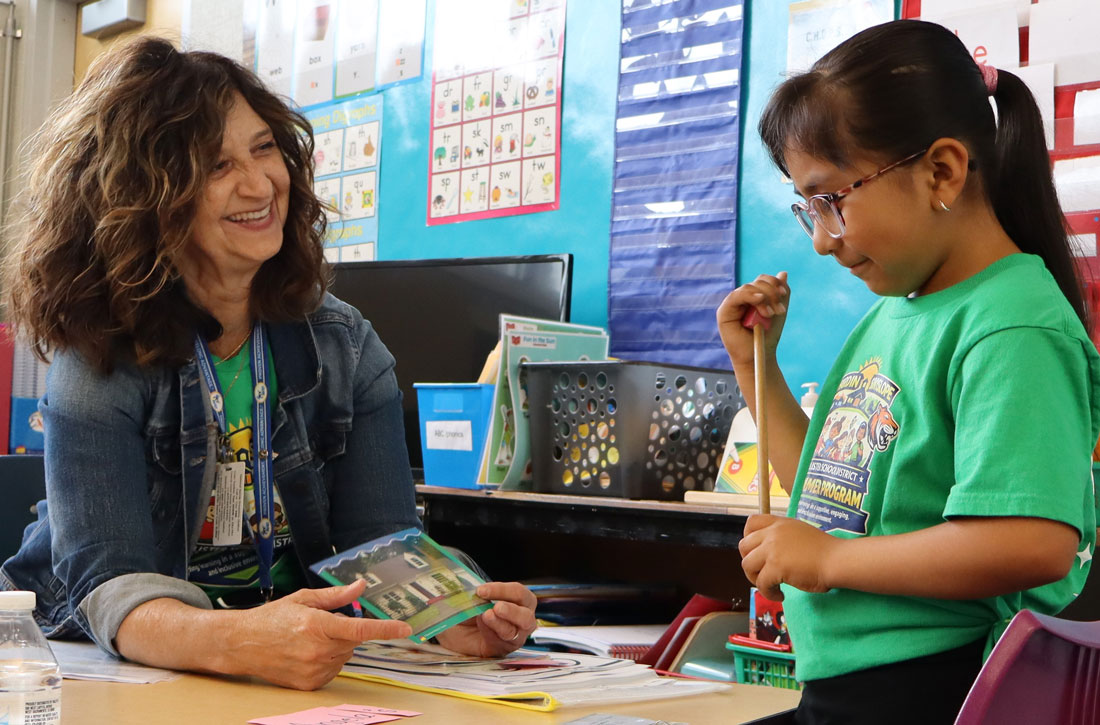
That instruction approach on the book depends on reading levels, with teachers reading to some students and more advanced students reading themselves. In some cases, students receive 3-to-1 or even down to 1-to-1 instruction from educators.
Sometimes teachers even get to work in tandem if students are absent on a particular day.
“It’s been a learning experience and even a professional development experience for our staff,” Espinoza said.
All in all, there are eight certificated staff and eight classified staff at the site along with the team members from Youth Alliance and the Arts Council.
“They made these cute little ice cream cones,” Espinoza said while touring the site, referencing a project for the Arts Council portion of the day. “They were so excited.”
Espinoza noted how the Expanded Learning Opportunities Program (ELOP) funding is intended for working families needing childcare, but the district incorporates academics because it is allowed.
Walking into one classroom, an Arts Council teacher was instructing a group of very young students.
“Who remembers which side is the left and which side is the right?” the teacher exclaimed with excitement before directing the students to follow her lead on some dancing as the kids clapped. “This is right! This is left! … Point to the right! Point to the left!”
Over at Sunnyslope, along with the general education population, there are 152 students with Individualized Education Programs (IEPs) who are enrolled in the Extended School Year (ESY). Dr. Gabriel Gutierrez, Director of Special Education for the District, said there are 47 paraprofessionals assisting students with IEPs working alongside about 20 staff members.
“The goal is really to prevent skill regression and then continue that learning—for students with the most challenging needs—so they don’t lose a lot of learning during the summer,” Gutierrez said.
He noted it’s nice to see a structure of similarity to programming for all students. Students with IEPs are also working on “Charlie and the Chocolate Factory” with the approach depending on the students’ needs.
Gutierrez lauded ESY administrator Lizsette Jimenez, and all summer school staff for their dedication and for continuing instruction for weeks after the school year’s completion.
“I just wanted to give all the special education teachers, paraprofessionals and related service providers a huge thank you—I want them to know how important they are as we aim to support our most impacted students,” he said.