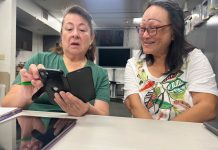


Tommy Sondgroth, who grew up in Hollister and maintains deep roots in the community, recently launched a smartphone application that aims to compete with the big-box behemoths of the gig economy while allowing service workers to keep more of the money they earn.
The app, known as FAVR, offers transportation, delivery, dog walking, shopping, home services and other services. Sondgroth said he designed the app to compete directly with Uber, Grubhub, DoorDash and similar companies.
FAVR, he said, has advantages over those industry stalwarts—for both the customer and the provider—that stem from “cutting out the middleman.” FAVR drivers, delivery people, dog walkers and other providers have more autonomy to set prices and interact with clients than gig workers on multinational platforms; and, as the app grows, customers will have increasing options at different prices, Sondgroth explained.
“We are changing how the gig economy operates,” Songroth said. “We let all of our providers quote their own jobs and keep 100% from each job. We are making providers much more money and they’re coming to us. It also saves the customers 20-30 percent.”
Sondgroth graduated from San Benito High School in 2002. His father, Frank Perez, has taught generations of locals for 30 years—and counting—at the campus now known as Hollister High School.
After graduating from SBHS, Sondgroth attended Gavilan College, then Dominican University where he studied art. He dropped out of Dominican to take a trip to Italy, “which was the best trip ever,” he said.
When he returned stateside, he took a job as a designer for a company that produces promotional products. He was soon promoted to national sales, and about 18 years ago the company moved him to New York City, where Sondgroth still lives.
After a few years of traveling all over the U.S., Sondgroth “got tired of that” job and sought a career change. He found a position with a software developer in Argentina.
He was laid off from that job, which pushed him into “survival mode”—a transition that instantly inspired and motivated him to get FAVR online. Sondgroth said the idea of an app like FAVR that gives gig economy workers more control had been simmering in his mind for a while.
His own personal experience in the gig economy without a full-time job helped reinforce the need.
“All the people in this gig economy are kind of treated like human meat. That’s their best option, and they’re making less than minimum wage,” Songroth said. “The platforms take over and squeeze these guys. I wanted to do the opposite and build a platform that is 100% supportive of them.”
When seeking a ride, delivery or other service offered on FAVR, the customer enters all the relevant inputs (such as pickup and destination address for a rideshare), which are received by all providers in the area. Each driver or provider then has the option to submit a “proposal” or bid price for the job.
The customer only sees one bid at a time; they can either accept the first bid or reject it and select a different offer from the next provider.
“Over 90% of people are accepting the first offer they get,” Sondgroth said.
After a trial period, FAVR will produce revenue through monthly membership fees paid by the providers, who otherwise keep all their customers’ proceeds.
Sondgroth’s father, who teaches U.S. History at Hollister High, said his son has always been a hard worker and filled with determination. A clear example is Sondgroth’s “passion” for basketball since he was a child.
Although Sondgroth entered high school as an undersized freshman who hadn’t yet hit his growth spurt—competing for a spot with bigger, stronger teammates—he stuck with it and later played for both Gavilan and Dominican University.
“He was the only one (from his high school team) who went on to play college basketball. That’s not an easy thing to do,” Perez said.
“I think that’s the lesson he took—being committed to something and not giving up, with no guarantee it’s going to work. It’s not an easy thing to do,” he added.
Perez also noted that Sondgroth is a “natural born” artist. “The creative side is transferred into this app. There’s a bridge between being the artist and developing this app,” Perez mused.
Sondgroth’s mother, Brenda Perez, has been an ongoing positive influence on Tommy and his two younger brothers.
“She really did instill in those boys what it means to be a hard worker, to be a good person,” Frank Perez said.
With technical and financial help from friends and investors, Sondgroth launched FAVR in late 2025. Still in the early stages of establishing the brand, he is also on the ground doing the legwork to make the app take off. Last weekend, he was at the SAP Center rideshare parking lot during the San Jose Sharks game, handing out QR codes for FAVR to Uber and Lyft drivers.
“We’re getting downloads and signups every day,” Sondgroth said.