





Letter: Costly financial impact of cap-and-trade
The rural community has borne the brunt of California’s economic downturn, including high unemployment rates and a lingering recession. Now is not the time for the California Air Resources Board to increase the cost of gas and diesel by 16-76 cents per gallon as a part of cap-and-trade regulations. While the goal of improving California’s environment is important, targeting consumers by increasing fuel prices is the harshest, most vindictive way to do so.
Letter: Taking exception on the story about Ridgemark changes
I would like to take exception to this article which makes the closure of 18 holes at Ridgemark sound positive and progressive. This assertion is beyond reality. Let me tell you why.
Letter: Confusion on Measure J pamphlets
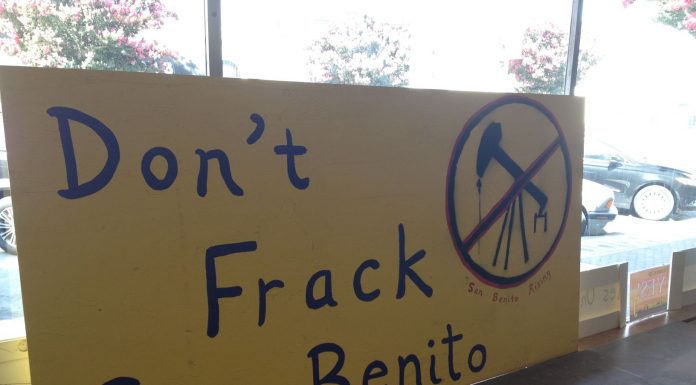
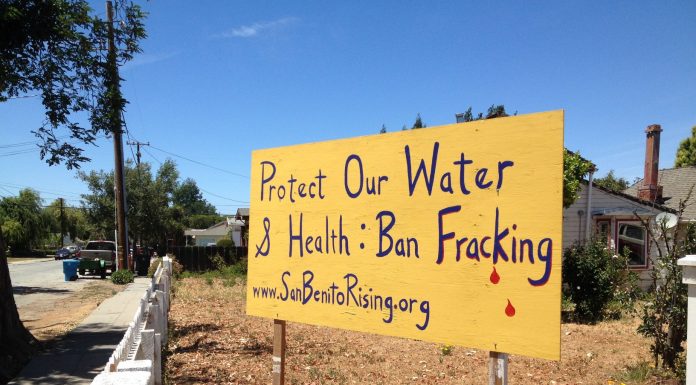
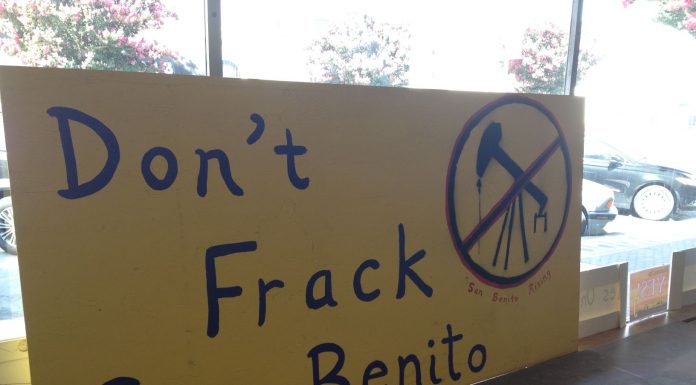
This weekend we received two pamphlets regarding Measure J. It seems that “Yes on J” means no to fracking but it allows conventional oil drilling.
Letter: Steering students toward college
After reading your article “Students in class and behaving” I felt compelled to write you. I am not debating the wisdom of the board or superintendent or principal of the high school and their thoughts, but more the continued efforts of education in the state of California to keep trying to put the square peg into a round hole. There are three main points I want to make about trying to force kids to be A to G qualified in order to graduate from high school. First is a practical objection: There are simply not enough spots in the California State Universities and University of California schools to support 100% of every high school kid graduating A to G qualified. My oldest daughter recently started school at San Diego State University and was fortunate that out of 74,000 applicants she was one of 8,000 accepted. Your article stated 42% of the graduating class (roughly 700) were A to G qualified. Let's say for sake of argument that figure is about average for most public high schools, and let's say that the average graduating class is 500; that's 200 kids on average per public high school. There are well over 1,000 high schools in California so that's 200,000 kids. If you were to up that to 60% as suggested you're talking around 350,000 kids which the state college system simply can't handle. Second, it never ceases to amaze me why people think that everyone can become A to G qualified. We have no problem acknowledging that athletic talent is not evenly distributed, musical talent, painting talent, mechanical ability, etc., but for some reason we keep insisting that academic talent is evenly distributed. The reality of the situation is that some kids achieve at a higher level than others, and will continue to do so throughout their lives. All kids can improve and as a school we should always strive to take each kid to a higher level than they came to us as. However, no matter how much intervention, money, and whatever type of solution we apply to the problem academic talent is not evenly distributed. There are geniuses, above average, average, below average, and way below average people of every race, color, religion, etc. It's not a racial issue, it's a human condition issue. Not every human being on the planet is capable of passing the AP calculus test. But my third reason and the one that I think is most important is the idea that by forcing kids to become A to G qualified the human race is missing out on some amazingly talented people. Why not start giving kids aptitude tests and interest tests at an early age. Why don't we have teachers start identifying strengths in kids at an early age, and then cultivate that talent, cultivate that passion. In essence make every kid A to G qualified in what they are good at and have a passion for. What statement do most great entrepenuers make, “Follow your passion and don't let anyone tell you that you can't”. There are a lot of kids who have a tremendous amount of intelligence, talent and passion that we are cheating by forcing them to become A to G qualified. I worry that my own children are being forced to be part of a system that may steer them into careers that pay good money, but may not be what their true talent and passion is. We continue to make kids and many successful adults feel that they are “losers” because they didn't go to a 4 year college, or that they are not “in the top tier”. Here are just a few of the good paying, important to society, and rewarding careers that don't require a 4 year college degree. Being an auto mechanic, being a policeman, fireman, paramedic, or other public safety officer. Being a cosmetologist, a medical or dental assistant, a skilled craftsman, a welder, electrician, pipe fitter, a soldier, day care provider, and the list goes on and on. But as educators we continue to keep trying to put that square peg into the round hole. We try shaving the edges, we trying hitting it with a bigger hammer, but maybe we should try what a good pipe fitter would and making an adapter so that the talents of the square peg, can be funneled into the round hole.
Letter: Measure J supporters’ claims are ‘malicious fairy tale’
Once upon a time in the 20th century in San Benito County, farmers grew crops and ranchers raised livestock. And they drilled wells for water to irrigate the land and grew some of the best fruit, vegetables and hay in the world. And it came to pass that the water was pumped out of the ground faster than it was restored which created a supply problem. And so the good people of the county formed a special district to manage the water in the county which came to be known as the San Benito County Water District. The district went into partnerships with other special water districts, the state of California and the federal government. And through those partnerships, the district built pipelines to import water into the county to help the farmers grow crops through "blue valve water supply connections" which you can see to this very day.
Letter: Local says quote in Measure J opposition’s ad is ‘a lie’
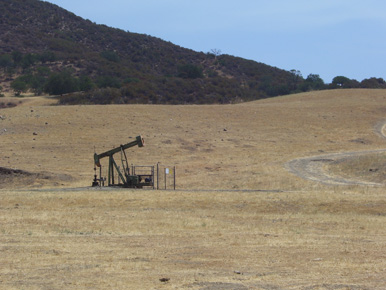
I am writing to alert you to an error that occurred in your paper. It was part of a full page ad that was sponsored by a group called “San Benito United” and featured three local citizens purporting to “protect” the County. Unfortunately, the ad propagates a lie, mouthed by one of the hapless three that claims “Measure J bans all petroleum production in San Benito ...” As you know, that is a lie and has been flatly contradicted by county planner, Michael Kelly, and Assistant County Counsel Barbara Thompson. This lie of San Benito United, propagated by our three neighbors, should not be allowed to stand. To that end, what Measure J really says should be printed here. Measure J is an “Initiative to Ban Well Stimulation Treatments and Enhanced Recovery (such as Fracking and Steam Injection) throughout all Unincorporated Areas of San Benito County and to Ban All Petroleum Operations in Residential General Plan Designations in Unincorporated San Benito County and Make Related Zoning Changes.”
Guest View: When you have no merits to your argument, resort to manure
Have you all seen the new pro-fracking ads on local TV news stations? The pro-frackers against Measure J have a poster boy named John Eade who drawls something like, “These outside agitators and San Francisco lawyers are trying to tell us cowboys what to do. I can't get the manure off my boots fast enough ...”
Guest View: Measure J is ‘no-growth, anti-domestic energy initiative’
Vote No on Measure J. There is simply no truth to the fear-mongering agenda of San Benito Rising and its purposefully deceptive initiative. The group is fostered and supported by the Center for Biological Diversity. In reality, the Center for Biological Diversity is an anti-industry legal attack group that uses the Endangered Species Act and media scare tactics as a weapon to destroy America's industrial strength and resource production by bringing lawsuits against a wide spectrum of resource-use companies, private property owners and against government to stop resource use.
Point-Counterpoint: Measure defined by fear-based arguments
BACKGROUND: The San Benito County Board of Supervisors passed Ordinance 918 at the June 18, 2013 meeting. This ordinance allows Project Indian to stimulate oil/gas well utilizing hydraulic fracturing (fracking) and other advanced processes. About a week later, the Center for Biological Diversity filed suit opposing Project Indian for an inadequate environment impact report. In July 2014, the court ruled in favor of the CBD.
Point-Counterpoint: Initiative to protect county’s water, health
Note: This is part of a new feature in which two writers share opposing views on local topics.