




Hollister’s downtown fire station nears completion
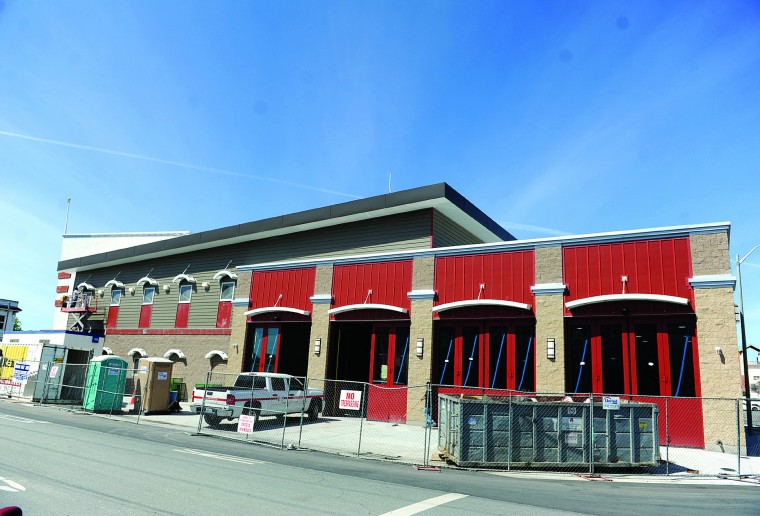
Contractors are wrapping up work on the new Fire Station No. 1 in downtown Hollister, and the city expects local fire crews to take calls there as early as April 28, according to the city’s planning chief.
A groovy happening in Hollister

Hollister theater-lovers, get ready to be shaken up this weekend.
San Benito Stage Company’s teen musical, “All Shook Up,” opens Friday at the Granada Theatre in downtown Hollister.
The musical, which was inspired by and features the songs of Elvis Presley, is based on William...
Hollister woman dies in Jan. 14 traffic collision

One person was killed Saturday morning after two vehicles collided in the Hollister-Gilroy area, according to the California Highway Patrol.
The CHP responded to the crash shortly after 7am Jan. 14 on eastbound State Route 156 just west of Monterey Street near San Juan Bautista.
The...
Vintage play and colorful sweets

Arcade video games and an ambrosial selection of fizzy drinks are the stuff of dreams to an eighties kid, and for both, there is Sweet Machine, San Juan Bautista’s newest business in its historic downtown.
Classic games like Millipede, Frogger, Sega’s Out Run, Double Dragon...
Proposal concerns hemp growers

Some hemp growers are telling San Benito County officials that a proposed ordinance puts unreasonable restrictions on the burgeoning industry.
Most recently, at a Jan. 15 county planning commission meeting, hemp growers pointed to language in the proposed ordinance that prohibits hemp operations within the...
San Benito eligible for electric vehicle charger rebates

A $30 million incentive project is underway to help businesses, nonprofits, public agencies and tribes fund the installation of electric vehicle chargers in disadvantaged and low-income communities across the state.
San Benito is on the list of 30 counties where such parties are eligible for...
School employee from Hollister accused of sexual assault
Locals celebrate life of César Chávez
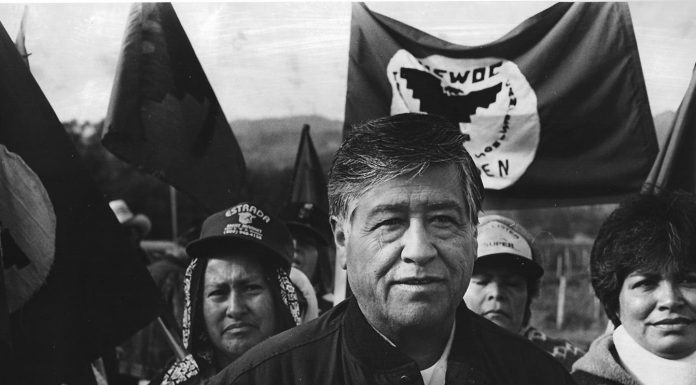
On March 31 each year, Californians celebrate the life and legacy of a man who brought hope, courage and justice to those who labor in the agricultural fields of America. César Chávez (March 31, 1927–April 23, 1993) advocated for fair treatment, wages and working conditions of farm workers in countless of communities across the country.
In San Benito County, Chávez is remembered by many, but none quite like the farm workers who shared some of the most challenging, but rewarding times with the legendary labor leader.
This historic account begins in 1977 in San Benito County. A time not much different than it is today—a tranquil setting surrounded by fertile lands as far as the eye can see. That tranquility came to a necessary standstill that would take its place in American history.
That year, hundreds of farm workers voted for union representation at Bertuccio Farms. Farm workers had grown tired of the low wages, unfair treatment and substandard working conditions. At that time, Bertuccio Farms was the largest agricultural employer in San Benito County— harvesting lettuce, onion and apricots.
Farm workers felt a sense of hopelessness, but their solidarity did not succumb to their circumstances, as they had heard of a soft-spoken leader with a powerful voice dedicated to fighting for the rights of farm worker. A man who in 1967 had successfully negotiated a contract for farm workers with former San Benito County Paicines wine giant Almaden. The workers plight was soon heard throughout the California Central Valley in Delano by labor leader César Chávez.
That summer, César Chávez, his youngest son Paul Chávez and the United Farm Workers (UFW) union had arrived in San Benito County to renew the farm workers right to unionize. Paul Chávez served as director of the Hollister UFW Field Office located on East Street. Paul Chávez, now chairman of the César Chávez Foundation, remembers that Hollister gave him his first experience as labor organizer of farm workers.
For over three years, the UFW continued contract negotiations with Bertuccio Farms, but the Bertuccio family held firm. The atmosphere in Hollister coiled in tension and workers had made the tough decision to go on strike. The morning of July 9, 1981 began with a distressing cry “Huelga, Huelga, Huelga!” (Strike, Strike, Strike!) a word that would come to define an entire movement of farm workers. Hundreds of Bertuccio Farm workers walked out of the fields firmly grasping the UFW flag, a red and black symbol depicting an Aztec eagle representing courage and dignity. In fact, courage would be needed as strikes were not taken lightly. This decision meant that hundreds farm workers would have to go without pay.
“Those were difficult times for our family, my children had to often go without the basic necessities. Nevertheless, that experience brought our family closer,” said Hollister resident Jose Carmen Lezama, past Bertuccio Farms employee and UFW picket line captain.
Farm workers knew that sacrifice was unavoidable.
“The strike lasted for a year and we were fighting for more than our jobs, we were fighting for our dignity,” said Javier Ceja, Hollister resident and past employee of Bertuccio Farms and UFW strike captain.
On Aug. 7, 1981, San Benito County made national news. Every major news media outlet across the country, reported that César Chávez, his son Paul and 30 Bertuccio Farm workers, including local residents Lezama, Ceja and Perez had been placed under arrest by San Benito County Sherriff’s deputies for trespassing while challenging the union’s right to organize workers.
Following the arrests, a local judge placed a temporary restraining order on the UFW— restricting the union’s access to non-strikers on Bertuccio Farms property. At that time, the California Supreme Court was considering a ruling on union access to employer properties to talk to non-strike members. However, this setback did not slow down the strike. A few days after being released, the Chávezs and 34 workers challenged the access ruling by the San Benito Superior Court and had faced the same result. After much deliberation, the court granted the UFW limited access to Bertuccio Farms’ property. This was a win for the UFW because this allowed union members to talk to non-striking workers during their one-hour lunch and breaks.
Over the next several months, contract negations continued without success.
By then, the strike had ripened and workers had learned to organize. Hollister farm workers began a boycott of Bertuccio Farm products—traveling daily to South San Francisco and Oakland. On occasion workers traveled as far as Los Angeles. Farm workers began to put pressure on owners of markets and warehouses to see if they would remove Bertuccio Farm products from their place of business; if the owners refused, the workers would picket.
“In the union I learned to speak English, I also learned something that you do not learn in school and that is to defend your rights,” said Hollister’s Ramiro Perez, past employee of Bertuccio Farms and UFW contract negotiations committee president.
In 1982, the California Agricultural Labor Relations Board charged Bertuccio Farms with “bad-faith bargaining.” By that time, most of Bertuccio’s 3,000 acres were empty; as 350 of the 400 workers had joined the strike. The Bertuccio family was constrained to picking the fields or risk losing millions of dollars in revenue.
Bertuccio Farms never signed a contract with the UFW. However, the farm worker experience in San Benito County began to change. Farm workers started to see better treatment, wages and working conditions.
The Bertuccio Farms effort would demonstrate to be one of the last glimpses of César Chávez as an organizer of farm workers. However, the Chávezs continued to work in San Benito County by organizing countless marches, bringing national attention to the dangers of pesticides on consumers and farm workers.
Their “Si Se Puede” (Yes we Can) chants continue to resonate in the hearts of many San Benito County residents.
Descendant of T.S. Hawkins turns 90
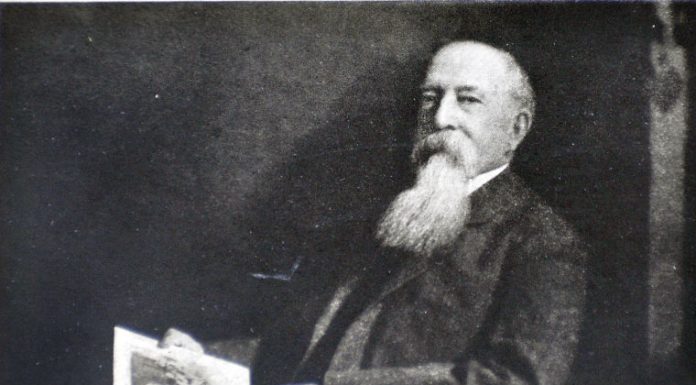
Ask Bill Hawkins where he was born and he won’t say San Benito County – he says he was born in a San Francisco hospital and started his life in North County when he was two weeks old. But he has spent most of his 90 years dedicated to his family ranch and public service.
Photo: Big rig crash closes Highway 129
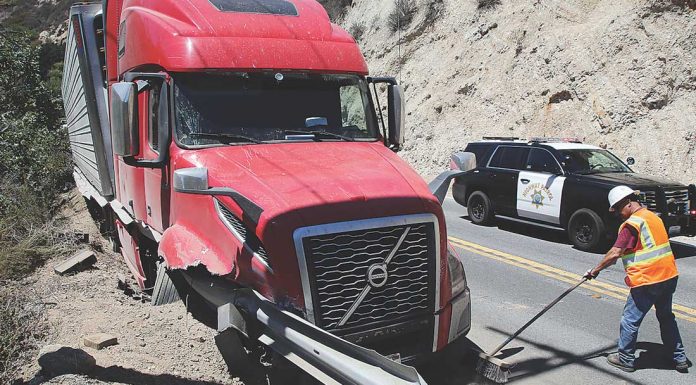
A Caltrans worker helps clean up after a big rig smashed into a guardrail Monday on Highway 129 in Aromas. California Highway Patrol officer Fred Smith said the rig, carrying food goods, was traveling east on Hwy 129 around 1:15pm when he veered to...


WEB DEVELOPMENT
& DIGITAL MEDIA
Website Design
Hosting
Website Optimization (SEO)
Social Media Management
Sponsored Content
Analytic Evaluation
Newsletter Marketing
OUR PUBLICATIONS
Alt Weeklies
East Bay Express
Good Times Santa Cruz
Metro Silicon Valley
North Bay Bohemian
Pacific Sun
Community Weeklies
Gilroy Dispatch
Healdsburg Tribune
Hollister Free Lance
King City Rustler
Los Gatan
Morgan Hill Times
Press Banner (Scotts Valley)
Salinas Valley Tribune
The Pajaronian (Watsonville)
Tri-City Voice (Fremont)
Magazines
Bay Area Parent
Bohème
Cannabis Chronicle
East Bay
South Valley